The Couch That Hugged Back
One of many reasons my son, Tucker, is an important member of my editorial team.

One of the things I have learned while writing a children’s book is that not every idea deserves to survive.
I remember how clunky it was the first time I read a rough draft to my family over Christmas break. The book has come a long way since those early pages. In fact, one big idea that is now central to the story wasn’t even in the original draft. I’ll save that story for another article in the coming weeks.
I once considered naming this book, Jonner and the Couch That Hugged Back.
Fortunately, Tucker talked me out of it when he said it “sounds really creepy.” Though I dropped the title, I held onto the idea of the hugging couch for several more months, before eventually letting it go.
At the time, I had a very specific vision for the Stuffed Animal Mansion. I didn’t just want a mansion filled with stuffed animals. I wanted the mansion itself to be made of stuffed animals. I imagined couches made of stuffed animals, lamps made of stuffed animals, and maybe even chandeliers made of stuffed animals. If there was a piece of furniture in the mansion, I probably wanted it covered in fur.
By the time I hired my illustrator several months later, I myself was struggling with how anyone could paint a mansion made of stuffed animals, to the level I saw it in my head. I knew I was going to need to rethink the art. What I ended up writing in my notes to Mille was “A warm, inviting living room. Stuffed animals interacting, laughing, playing. Feels like home and belonging. There is lots of activity happening, including DJ Tooty Turtle pushing a train across the floor.”
When Mille sent back her first sketch of the living room, I found myself grinning from ear to ear. She had somehow taken all of my scattered notes and turned them into a room that felt alive. There were stuffed animals lounging on couches, animals peeking from balconies, trains running across the floor, and little details tucked into every corner.
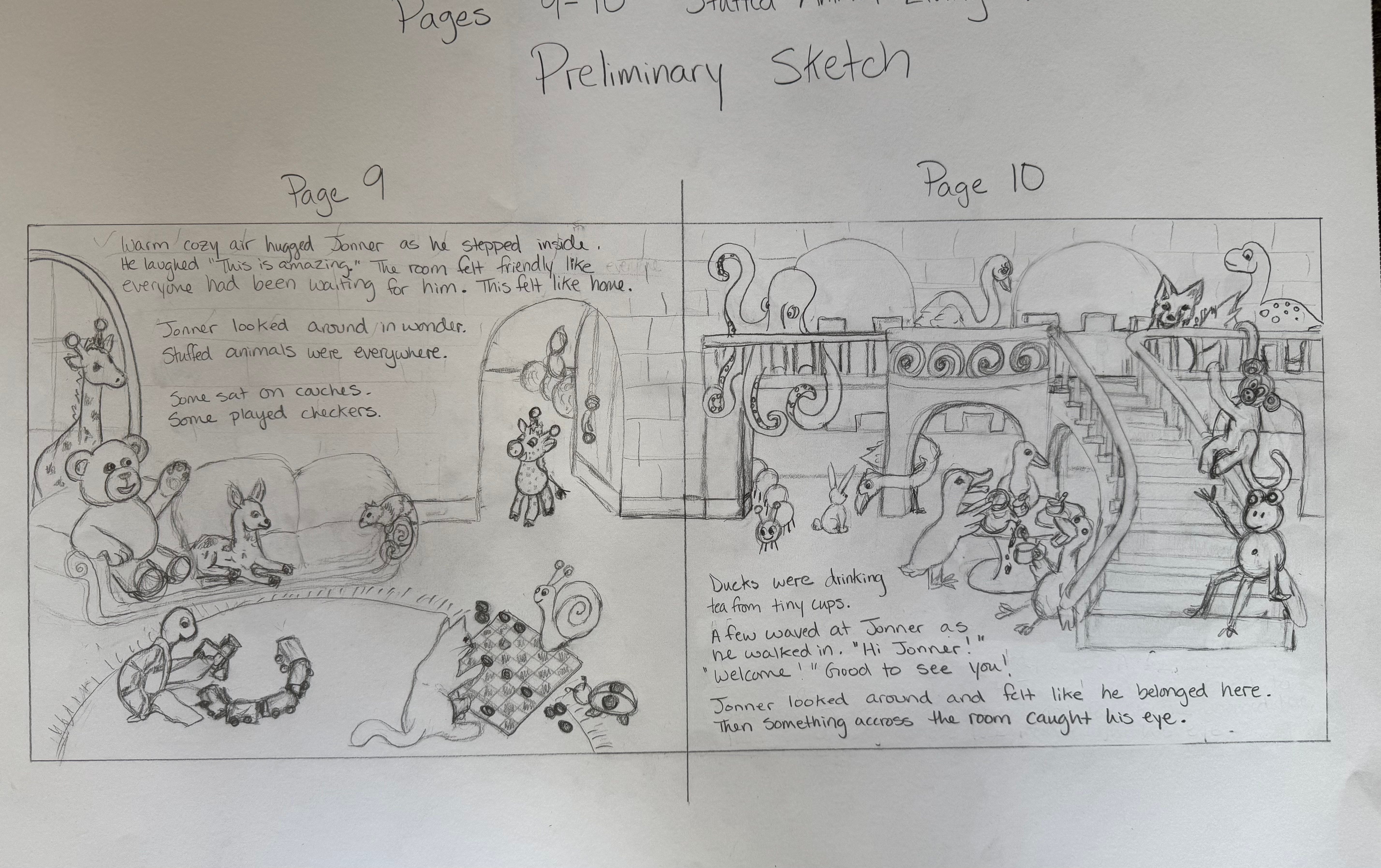
When I looked at Mille’s sketch, I wasn’t thinking about couches or chandeliers anymore. I was thinking about the stuffies. I was thinking about the feeling of the room. Most of all, I was thinking about whether children would want to step inside that room and stay awhile. I wanted the page to be filled with little discoveries that would bring them back again and again. I want the kind of pages where a child notices something new on the fifth reading that they missed on the first.
One of the things I didn’t expect about self-publishing was how much I would have to learn to communicate creative ideas. Writing the story is one thing. Explaining the feeling you hope an illustration will create is something entirely different. The process has been exciting, intimidating, and incredibly rewarding all at the same time.
I do wonder what Millie is thinking going through this process with me, since it’s her first time too. I hope I’m not driving her crazy with my wild ideas and sharing our journey publicly. But if I am, she hasn’t said so. I’m grateful to be experiencing this with a true professional like her.
I asked for one set of sketch requests that included a capybara because all four of my kids think capybaras are awesome, a horse doing something silly (ideally a tea cup on his head), an otter, an alpaca, a hedgehog, and more teddy bears. I also asked for a “generational patchwork quilt rug” because I wanted the room to feel warm and well-loved, like something that had been passed down through generations.
At one point, Mille responded with what may be one of my favorite emails from the entire project:
“All animals you requested and a few extra have been added to the sketch. The otter is the one peaking over the couch. We are now at max capacity.” I love being at max capacity. I took this as a personal victory.
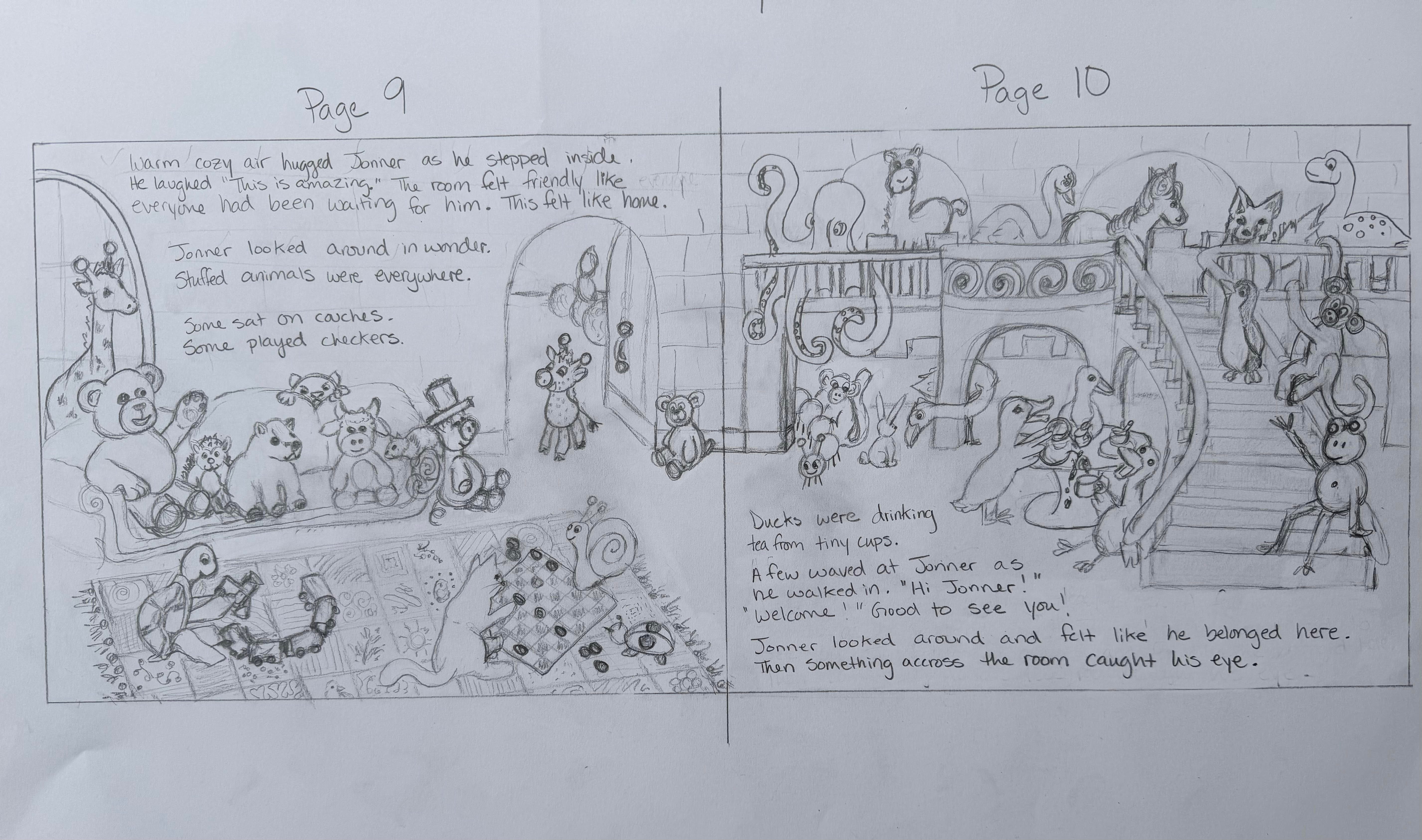
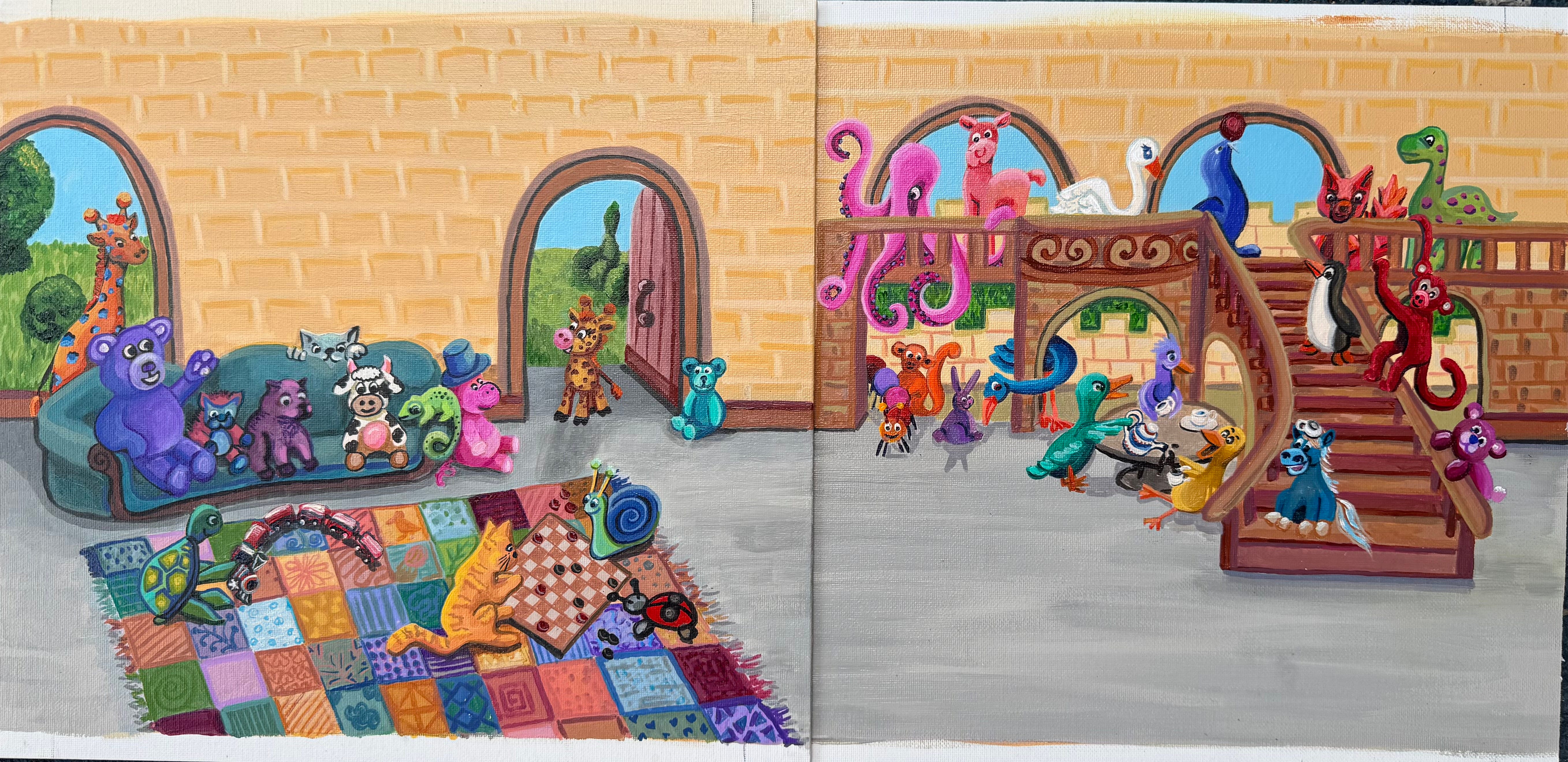
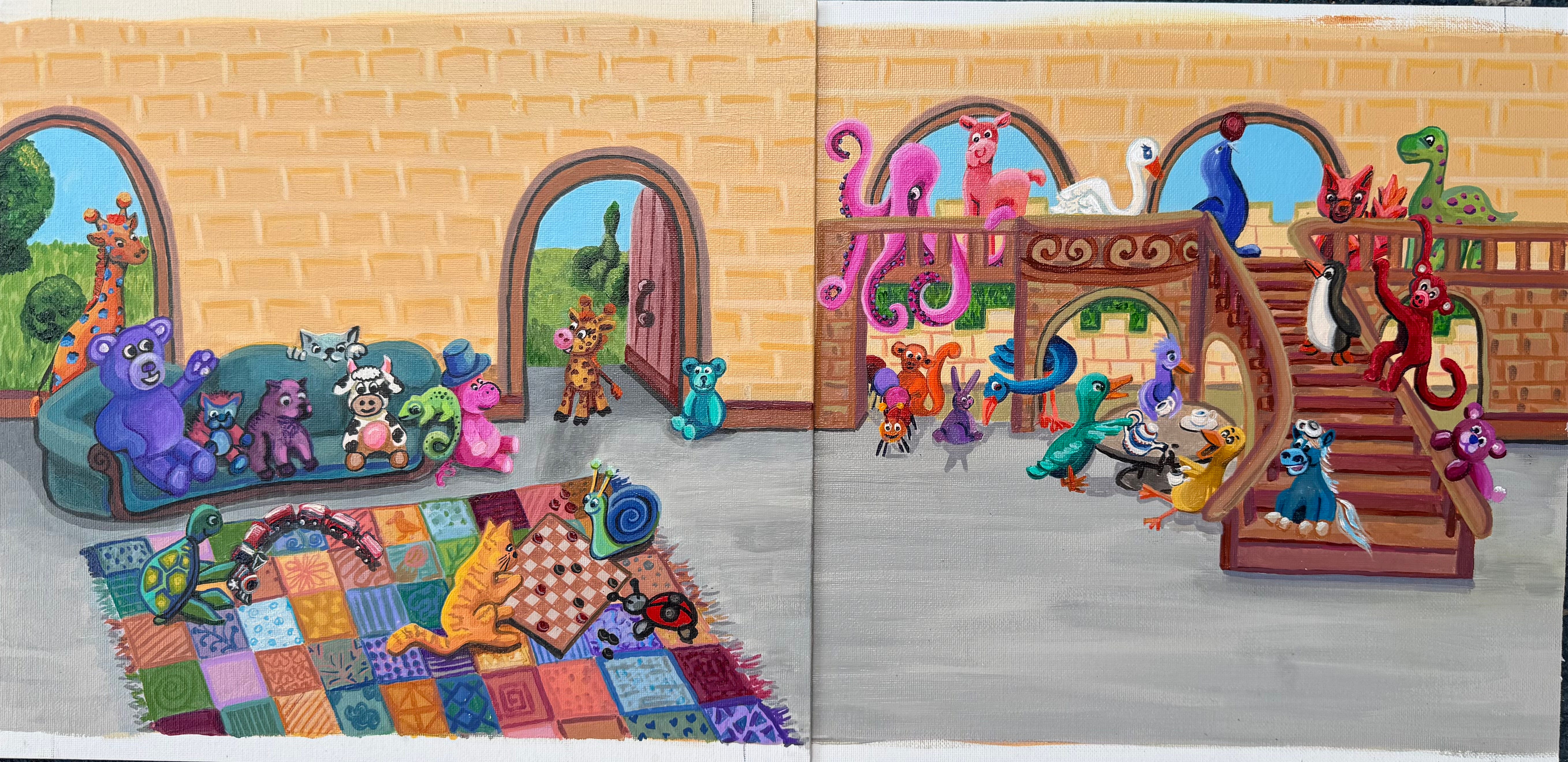
As the process evolved, I was less concerned about whether any piece of furniture looked like a stuffed animal and more focused on whether the room felt like a place children would want to visit. I wanted ducks drinking tea from tiny cups. I wanted animals waving from balconies. I wanted children to look at the page and spend a few extra minutes discovering all the little details tucked into the corners.
More than anything, I wanted the room to feel welcoming. Not just for the child turning the page, but for the parent reading the story aloud. I wanted it to capture a small piece of what I imagine Heaven might feel like, which is a place where you are happy to arrive and no one is in a hurry to leave.
The final painting ended up being one of the most detailed spreads in the book. Mille even warned me that it would be one of the most challenging illustrations she had attempted so far. Looking at the finished piece now, I am grateful we took a different approach than I originally imagined.
Because along the way, the living room stopped being about creating the most imaginative stuffed animal mansion possible. It became about creating a place where Jonner felt like he belonged.
When I go back and read the original manuscript notes, that was the goal all along.
“The room felt friendly, like everyone had been waiting for him.”
“This felt like home.”
When I think about Heaven, I certainly think about wonder, beauty, and things beyond my imagination. But I also think about belonging. I think about being welcomed. I think about walking into a place where I am fully known and fully loved.
A place that feels like home, in our Father’s House.
And thankfully, there is not a single couch that hugs anyone.